Food Procurement, Compliance and AI Can No Longer Operate Separately

Key Takeaways
- Food-at-home prices are expected to keep rising in 2026, and tariff discussions continue to create uncertainty around sourcing and pricing.
- Decisions that once stayed within a single department now reach across procurement, compliance, and operations.
- The effectiveness of AI investments depends on the information available to the people and processes using them.
- Connecting procurement, compliance, spend, and data workflows supports faster execution and more informed decision-making.
Why Are Food Supply Chain Decisions Getting Harder?
Pricing pressure, tariff uncertainty, and rising buyer expectations are converging on the same decisions at once, leaving food companies in a more unpredictable operating environment than they faced just a few years ago.
Food-at-home prices are expected to continue rising in 2026, and ongoing tariff discussions continue to create uncertainty around sourcing and pricing decisions. Buyers are also placing greater emphasis on supplier performance, product information, and compliance requirements. For manufacturers, distributors, and operators, these pressures often converge around the same set of business decisions.
A sourcing change can influence contract terms, supplier documentation, reporting requirements, and purchasing costs. A shift in supplier performance can affect procurement planning, operational execution, and customer expectations. Decisions that once stayed within a single department now reach much further.
Connected decision-making means procurement, compliance, and data teams work from the same information at the same time.
Why Do Changing Conditions Require Faster Decisions?
Pricing, supply, and compliance pressures now hit multiple teams at the same time, and a slow response in one area delays the others. Right now, procurement teams are responding to pricing changes and supply concerns while compliance teams manage documentation requirements and customer requests. Business leaders evaluating technology investments are often looking at the same underlying challenges because supplier performance, product information, purchasing activity, and compliance obligations frequently intersect.
When information is difficult to access or scattered across multiple systems, responding to change takes longer. Teams spend more time validating information, tracking down documentation, and coordinating across departments before action can be taken.
Technology investments are increasingly tied to those day-to-day realities. Organizations are looking for ways to reduce manual work, improve response times, and give teams access to information that supports faster decisions.
Why Does AI Depend on More Than Technology?
The results any AI tool delivers reflect the quality and accessibility of the data feeding it. Even so, AI continues to attract attention across the food industry as organizations evaluate new ways to support procurement, compliance, and operational workflows. Many of those efforts are focused on improving efficiency, identifying issues sooner, and helping teams respond more quickly to changing conditions.
The effectiveness of those investments depends on the information available to the people and processes using them. Procurement activity, supplier records, compliance documentation, contracts, and operational data all contribute to decisions being made throughout the business. When those elements are disconnected, teams often spend additional time verifying information before they can move forward.
At iTradeNetwork, we work with manufacturers, distributors, and operators navigating these challenges across the food supply chain. As sourcing conditions, reporting obligations, and market pressures continue to evolve, procurement, compliance, and technology decisions are becoming more closely tied together.
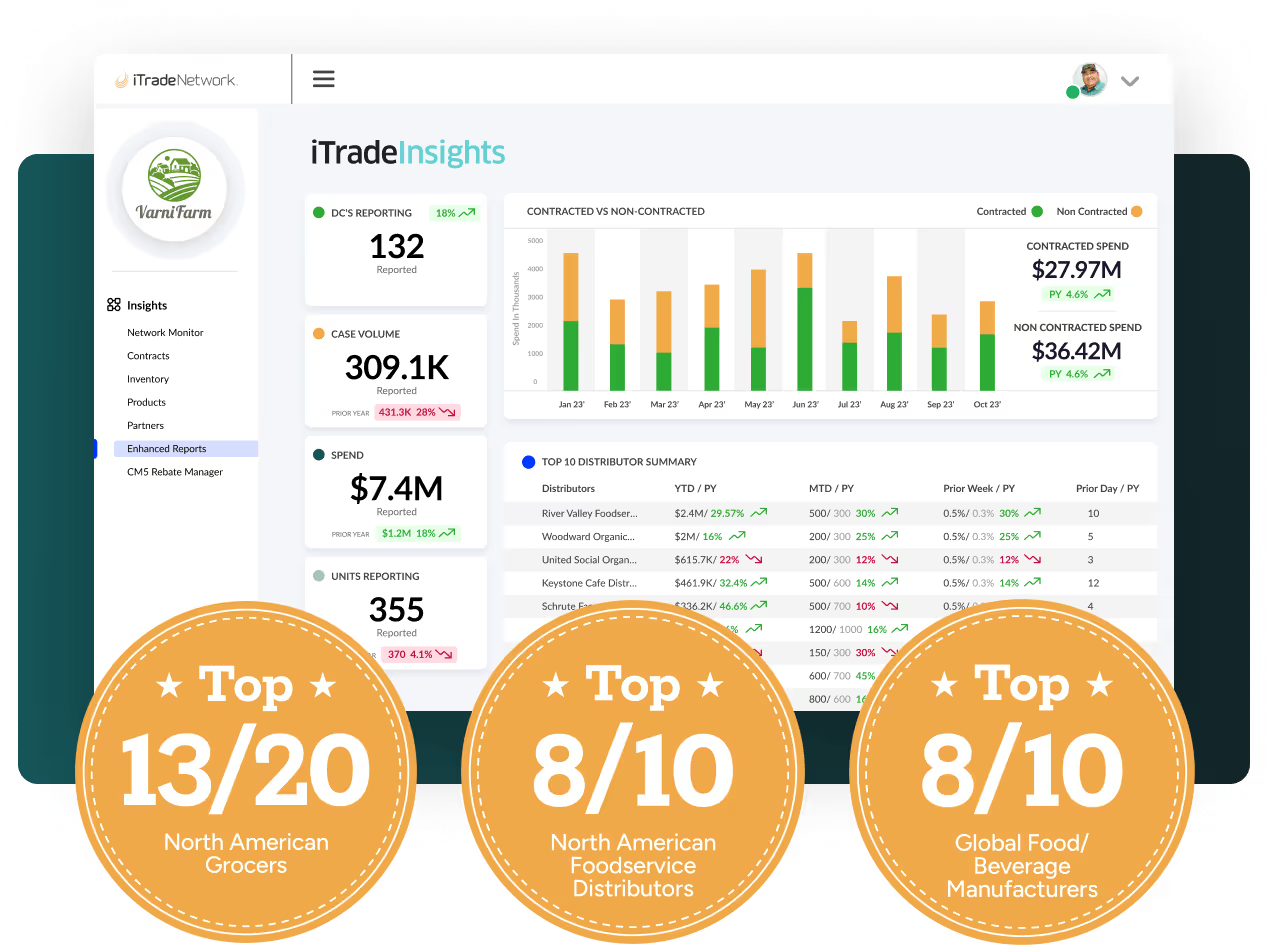
Through the Cerena Solution Suite, iTradeNetwork helps food supply chain teams connect procurement, compliance, spend, and data workflows in a way that supports faster execution and more informed decision-making. As organizations continue looking for ways to respond to change without adding complexity, bringing these functions together is becoming an increasingly important part of supply chain operations.
Let’s discuss your current operational hurdles. Connect with our team today to explore how unifying your supply chain workflows can protect your margins.
Frequently Asked Questions
What is connected decision-making in the food supply chain?
Connected decision-making means procurement, compliance, spend, and data workflows share the same information, so teams can respond to pricing, supplier, and documentation changes without waiting on other departments.
Why do food companies need faster decisions in 2026?
Food-at-home prices are expected to keep rising in 2026, tariff discussions continue to create sourcing uncertainty, and buyers are placing greater emphasis on supplier performance and compliance. These pressures reach procurement, compliance, and operations at the same time, so a slow response in one area delays the others.
How does AI support food procurement and compliance?
AI helps teams reduce manual work, identify issues sooner, and respond more quickly to changing conditions. Its results depend on the quality and accessibility of the data behind it, which is why connected procurement, compliance, and spend workflows matter.
What is the Cerena Solution Suite?
The Cerena Solution Suite from iTradeNetwork connects procurement, compliance, spend, and data workflows for food supply chain teams, supporting faster execution and more informed decision-making.
Redefine the revenue impact of freight data & analytics
Uncover what clients and clientele are prioritizing in today’s shifting freight and logistics landscape.
Redefine the revenue impact of freight data & analytics
Uncover what clients and clientele are prioritizing in today’s shifting freight and logistics landscape.
Speak to an Expert
Take a closer look at the platform built for buyers and their trading partners
Food Procurement, Compliance and AI Can No Longer Operate Separately
Key Takeaways
- Food-at-home prices are expected to keep rising in 2026, and tariff discussions continue to create uncertainty around sourcing and pricing.
- Decisions that once stayed within a single department now reach across procurement, compliance, and operations.
- The effectiveness of AI investments depends on the information available to the people and processes using them.
- Connecting procurement, compliance, spend, and data workflows supports faster execution and more informed decision-making.
Why Are Food Supply Chain Decisions Getting Harder?
Pricing pressure, tariff uncertainty, and rising buyer expectations are converging on the same decisions at once, leaving food companies in a more unpredictable operating environment than they faced just a few years ago.
Food-at-home prices are expected to continue rising in 2026, and ongoing tariff discussions continue to create uncertainty around sourcing and pricing decisions. Buyers are also placing greater emphasis on supplier performance, product information, and compliance requirements. For manufacturers, distributors, and operators, these pressures often converge around the same set of business decisions.
A sourcing change can influence contract terms, supplier documentation, reporting requirements, and purchasing costs. A shift in supplier performance can affect procurement planning, operational execution, and customer expectations. Decisions that once stayed within a single department now reach much further.
Connected decision-making means procurement, compliance, and data teams work from the same information at the same time.
Why Do Changing Conditions Require Faster Decisions?
Pricing, supply, and compliance pressures now hit multiple teams at the same time, and a slow response in one area delays the others. Right now, procurement teams are responding to pricing changes and supply concerns while compliance teams manage documentation requirements and customer requests. Business leaders evaluating technology investments are often looking at the same underlying challenges because supplier performance, product information, purchasing activity, and compliance obligations frequently intersect.
When information is difficult to access or scattered across multiple systems, responding to change takes longer. Teams spend more time validating information, tracking down documentation, and coordinating across departments before action can be taken.
Technology investments are increasingly tied to those day-to-day realities. Organizations are looking for ways to reduce manual work, improve response times, and give teams access to information that supports faster decisions.
Why Does AI Depend on More Than Technology?
The results any AI tool delivers reflect the quality and accessibility of the data feeding it. Even so, AI continues to attract attention across the food industry as organizations evaluate new ways to support procurement, compliance, and operational workflows. Many of those efforts are focused on improving efficiency, identifying issues sooner, and helping teams respond more quickly to changing conditions.
The effectiveness of those investments depends on the information available to the people and processes using them. Procurement activity, supplier records, compliance documentation, contracts, and operational data all contribute to decisions being made throughout the business. When those elements are disconnected, teams often spend additional time verifying information before they can move forward.
At iTradeNetwork, we work with manufacturers, distributors, and operators navigating these challenges across the food supply chain. As sourcing conditions, reporting obligations, and market pressures continue to evolve, procurement, compliance, and technology decisions are becoming more closely tied together.
Through the Cerena Solution Suite, iTradeNetwork helps food supply chain teams connect procurement, compliance, spend, and data workflows in a way that supports faster execution and more informed decision-making. As organizations continue looking for ways to respond to change without adding complexity, bringing these functions together is becoming an increasingly important part of supply chain operations.
Let’s discuss your current operational hurdles. Connect with our team today to explore how unifying your supply chain workflows can protect your margins.
Frequently Asked Questions
What is connected decision-making in the food supply chain?
Connected decision-making means procurement, compliance, spend, and data workflows share the same information, so teams can respond to pricing, supplier, and documentation changes without waiting on other departments.
Why do food companies need faster decisions in 2026?
Food-at-home prices are expected to keep rising in 2026, tariff discussions continue to create sourcing uncertainty, and buyers are placing greater emphasis on supplier performance and compliance. These pressures reach procurement, compliance, and operations at the same time, so a slow response in one area delays the others.
How does AI support food procurement and compliance?
AI helps teams reduce manual work, identify issues sooner, and respond more quickly to changing conditions. Its results depend on the quality and accessibility of the data behind it, which is why connected procurement, compliance, and spend workflows matter.
What is the Cerena Solution Suite?
The Cerena Solution Suite from iTradeNetwork connects procurement, compliance, spend, and data workflows for food supply chain teams, supporting faster execution and more informed decision-making.
Unlock It Now!