From Manual Orders to Practical Automation

For all the investment in digital systems, many orders still arrive in formats that feel unchanged.
PDFs sent over email. Attachments passed between teams. In some cases, even fax.
These are not rare exceptions. They are part of the day to day reality for many organizations, including those working with large and established customers. While systems downstream have evolved, the way orders enter the business often has not.
Where the Process Actually Begins
It is easy to think about automation in terms of systems and integrations. In practice, the challenge starts earlier.
Orders arrive through different channels depending on the customer. Some follow consistent formats. Others vary each time. The intake process becomes a mix of manual steps, handoffs, and interpretation.
Rather than trying to standardize how every customer submits orders, a more practical approach is to work with that variability.
Reading the Order Is Not the Hard Part
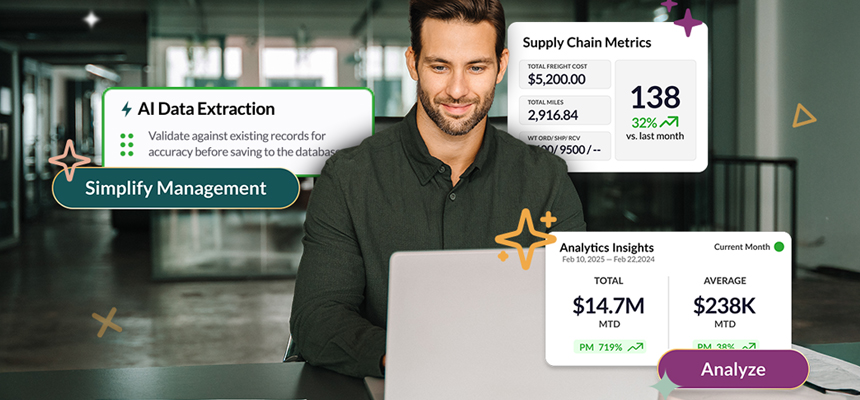
Modern AI tools can do a reasonable job extracting structured data from documents. They can identify fields like PO numbers or requested dates when those fields are clearly labeled.
The difficulty shows up in everything that is not clearly defined.
Orders often rely on shared understanding between teams. Certain terms are interpreted based on experience. Some details are implied rather than stated. That context lives with people, not in the document itself.
The Role of Interpretation
In most organizations, someone reviews each order and fills in the gaps. They recognize the customer, understand how that customer typically orders, and make decisions about how to process it.
This step is not always visible, but it is essential.
Any attempt to improve the process has to account for that layer of interpretation. Without it, automation can introduce as many issues as it solves.
Why Validation Matters
Even when data is extracted correctly, there is still a question of trust.
Order information feeds directly into operational systems. Errors can affect fulfillment, invoicing, and customer relationships. Because of that, teams tend to build in checks before allowing orders to move forward.
A more sustainable approach is to treat validation as part of the process rather than an afterthought. When new or unfamiliar data appears, it needs to be confirmed once and then reused with confidence.
Over time, this builds a more reliable foundation that reduces the need for repeated manual review.
A Shift in How the Problem Is Framed
Manual orders are often treated as a problem to eliminate. In reality, they are a condition of how many businesses operate.
A more useful perspective is to focus on how those orders are handled once they arrive. The goal is not perfect inputs, but rather a process that can handle imperfect inputs in a consistent way.
That shift changes where attention is placed. Instead of trying to control every variable upstream, teams can build workflows that absorb variability and still produce reliable outcomes.
See It in Action
If you are interested in how teams are approaching this in practice, watch the full webinar, Order Agent: AI in Action, for a closer look at how manual order processes are evolving.
Redefine the revenue impact of freight data & analytics
Uncover what clients and clientele are prioritizing in today’s shifting freight and logistics landscape.
Redefine the revenue impact of freight data & analytics
Uncover what clients and clientele are prioritizing in today’s shifting freight and logistics landscape.
Speak to an Expert
Take a closer look at the platform built for buyers and their trading partners
From Manual Orders to Practical Automation
For all the investment in digital systems, many orders still arrive in formats that feel unchanged.
PDFs sent over email. Attachments passed between teams. In some cases, even fax.
These are not rare exceptions. They are part of the day to day reality for many organizations, including those working with large and established customers. While systems downstream have evolved, the way orders enter the business often has not.
Where the Process Actually Begins
It is easy to think about automation in terms of systems and integrations. In practice, the challenge starts earlier.
Orders arrive through different channels depending on the customer. Some follow consistent formats. Others vary each time. The intake process becomes a mix of manual steps, handoffs, and interpretation.
Rather than trying to standardize how every customer submits orders, a more practical approach is to work with that variability.
Reading the Order Is Not the Hard Part
Modern AI tools can do a reasonable job extracting structured data from documents. They can identify fields like PO numbers or requested dates when those fields are clearly labeled.
The difficulty shows up in everything that is not clearly defined.
Orders often rely on shared understanding between teams. Certain terms are interpreted based on experience. Some details are implied rather than stated. That context lives with people, not in the document itself.
The Role of Interpretation
In most organizations, someone reviews each order and fills in the gaps. They recognize the customer, understand how that customer typically orders, and make decisions about how to process it.
This step is not always visible, but it is essential.
Any attempt to improve the process has to account for that layer of interpretation. Without it, automation can introduce as many issues as it solves.
Why Validation Matters
Even when data is extracted correctly, there is still a question of trust.
Order information feeds directly into operational systems. Errors can affect fulfillment, invoicing, and customer relationships. Because of that, teams tend to build in checks before allowing orders to move forward.
A more sustainable approach is to treat validation as part of the process rather than an afterthought. When new or unfamiliar data appears, it needs to be confirmed once and then reused with confidence.
Over time, this builds a more reliable foundation that reduces the need for repeated manual review.
A Shift in How the Problem Is Framed
Manual orders are often treated as a problem to eliminate. In reality, they are a condition of how many businesses operate.
A more useful perspective is to focus on how those orders are handled once they arrive. The goal is not perfect inputs, but rather a process that can handle imperfect inputs in a consistent way.
That shift changes where attention is placed. Instead of trying to control every variable upstream, teams can build workflows that absorb variability and still produce reliable outcomes.
See It in Action
If you are interested in how teams are approaching this in practice, watch the full webinar, Order Agent: AI in Action, for a closer look at how manual order processes are evolving.
Unlock It Now!