AI at Scale: The Real Cost of Siloed AI in Manufacturing

Artificial intelligence has become a constant presence in manufacturing conversations. It shows up in production planning, supplier engagement, and operations. The promise is real. But in practice, many manufacturers are applying AI too narrowly.
As Drew Shields, Solutions Director at iTradeNetwork, noted during a recent discussion, manufacturers are asking smart questions, but often through a limited lens. “How can I use AI to move product more efficiently? How do I get closer to my customers? How do I reduce the gaps between nodes in the supply chain?”
These are the right questions to ask. The opportunity, however, is bigger than any one use case.
A Single Test Case Is Not a Strategy
Starting small makes sense. A focused AI pilot in a single department is often the best way to begin. The problem is when that pilot becomes the entire approach.
When AI is used in just one area, it stays isolated. It may generate local value, but it cannot support broader transformation. That limited reach often leads to duplication of effort and higher cost without long-term gain.
Instead, manufacturers should consider where AI can support connected decisions. A change in how orders are processed affects financial accuracy. A pricing improvement can reduce friction with key partners. Each workflow contributes to the whole. When AI operates across them, the results are stronger.
Closing the Distance in Supply Chains
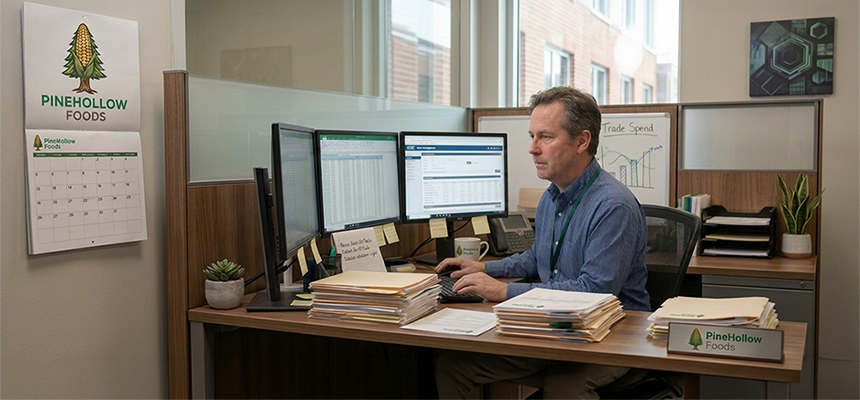
Many manufacturers work within fragmented systems. Tools are disconnected. Information flows slowly. This creates distance between teams and between the business and its customers.
AI can help reduce that distance. It identifies patterns and pinpoints where handoffs break down. But this only works when the data it relies on is consistent and accessible. AI integration is designed to provide clarity that supports faster, more confident decisions.
Scaling the Right Way
Scaling AI should extend impact, not expand technology. When investments are shared across departments, manufacturers gain the ability to see how one decision affects another. That cross-functional alignment is where scale becomes meaningful.
AI only delivers its full value when it works across the business, not within a single corner of it. That kind of integration supports strategic growth, not just operational efficiency.
These ideas were discussed in more detail during our executive session, From Cost to Capability: Rethinking the Manufacturing Ecosystem in the Age of AI. If you missed the live event, you can watch the session on demand here. It explores how manufacturers can shift from isolated pilots to connected, AI-enabled ecosystems that support long-term competitiveness.
Cerena for Manufacturers helps organize and connect operational data across systems and teams, creating a strong foundation for applying AI in practical, meaningful ways. If you’re exploring how to integrate AI into your operations, let’s talk!
Redefine the revenue impact of freight data & analytics
Uncover what clients and clientele are prioritizing in today’s shifting freight and logistics landscape.
Redefine the revenue impact of freight data & analytics
Uncover what clients and clientele are prioritizing in today’s shifting freight and logistics landscape.
Speak to an Expert
Take a closer look at the platform built for buyers and their trading partners
AI at Scale: The Real Cost of Siloed AI in Manufacturing
Artificial intelligence has become a constant presence in manufacturing conversations. It shows up in production planning, supplier engagement, and operations. The promise is real. But in practice, many manufacturers are applying AI too narrowly.
As Drew Shields, Solutions Director at iTradeNetwork, noted during a recent discussion, manufacturers are asking smart questions, but often through a limited lens. “How can I use AI to move product more efficiently? How do I get closer to my customers? How do I reduce the gaps between nodes in the supply chain?”
These are the right questions to ask. The opportunity, however, is bigger than any one use case.
A Single Test Case Is Not a Strategy
Starting small makes sense. A focused AI pilot in a single department is often the best way to begin. The problem is when that pilot becomes the entire approach.
When AI is used in just one area, it stays isolated. It may generate local value, but it cannot support broader transformation. That limited reach often leads to duplication of effort and higher cost without long-term gain.
Instead, manufacturers should consider where AI can support connected decisions. A change in how orders are processed affects financial accuracy. A pricing improvement can reduce friction with key partners. Each workflow contributes to the whole. When AI operates across them, the results are stronger.
Closing the Distance in Supply Chains
Many manufacturers work within fragmented systems. Tools are disconnected. Information flows slowly. This creates distance between teams and between the business and its customers.
AI can help reduce that distance. It identifies patterns and pinpoints where handoffs break down. But this only works when the data it relies on is consistent and accessible. AI integration is designed to provide clarity that supports faster, more confident decisions.
Scaling the Right Way
Scaling AI should extend impact, not expand technology. When investments are shared across departments, manufacturers gain the ability to see how one decision affects another. That cross-functional alignment is where scale becomes meaningful.
AI only delivers its full value when it works across the business, not within a single corner of it. That kind of integration supports strategic growth, not just operational efficiency.
These ideas were discussed in more detail during our executive session, From Cost to Capability: Rethinking the Manufacturing Ecosystem in the Age of AI. If you missed the live event, you can watch the session on demand here. It explores how manufacturers can shift from isolated pilots to connected, AI-enabled ecosystems that support long-term competitiveness.
Cerena for Manufacturers helps organize and connect operational data across systems and teams, creating a strong foundation for applying AI in practical, meaningful ways. If you’re exploring how to integrate AI into your operations, let’s talk!
Unlock It Now!