The Hidden Margin Crisis: How Revenue Leakage Shows Up in Everyday Workflows

Margin pressure has always been part of food manufacturing. What’s changed is how easily it can slip through the cracks.
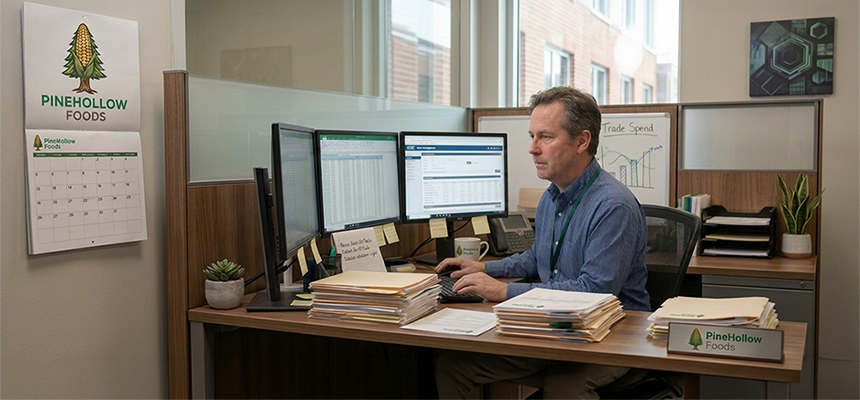
With costs moving unpredictably and service expectations staying high, accuracy across pricing, rebates, and deductions is no longer optional. Yet many manufacturers still rely on manual, disconnected processes to manage trade programs. The result isn’t always obvious at first, but over time it shows up as revenue leakage that’s difficult to trace and even harder to recover.
Most margin erosion doesn’t come from one major failure. It comes from small mismatches that surface during everyday work.
When contract terms, pricing updates, and item data live in different systems, teams are left to reconcile the differences by hand. That’s where problems start to appear:
- A rebate rate applied incorrectly because a contract update wasn’t reflected everywhere
- A bill-back rejected due to inconsistent item identifiers
- A deduction delayed while teams sort through conflicting data
- Individually, these issues may seem manageable. Over time, they add up to avoidable write-offs, disputes, and rework that slowly eat away at margin.
Cost volatility makes these gaps even more expensive. As input prices, freight costs, and labor expenses shift, there’s less room for error. Every delayed claim, inaccurate payout, or unresolved deduction has a direct impact on profitability. In an industry that still operates on thin margins, small inefficiencies can quickly become material losses
Fragmentation Is Where Leakage Begins
What makes this challenging is that the issue isn’t effort or attention. Finance, trade, and operations teams are working hard. The real problem is fragmentation.
In many organizations, trade programs, claims, audits, and pricing are managed in isolation, making it difficult to see where data disagrees or where risk is forming. Centralizing these processes changes that dynamic. With shared visibility and consistent data, teams can:
- Identify discrepancies earlier in the claim and rebate lifecycle
- Reduce manual reconciliation and back-and-forth with partners
- Audit programs with confidence using aligned contract and pricing data
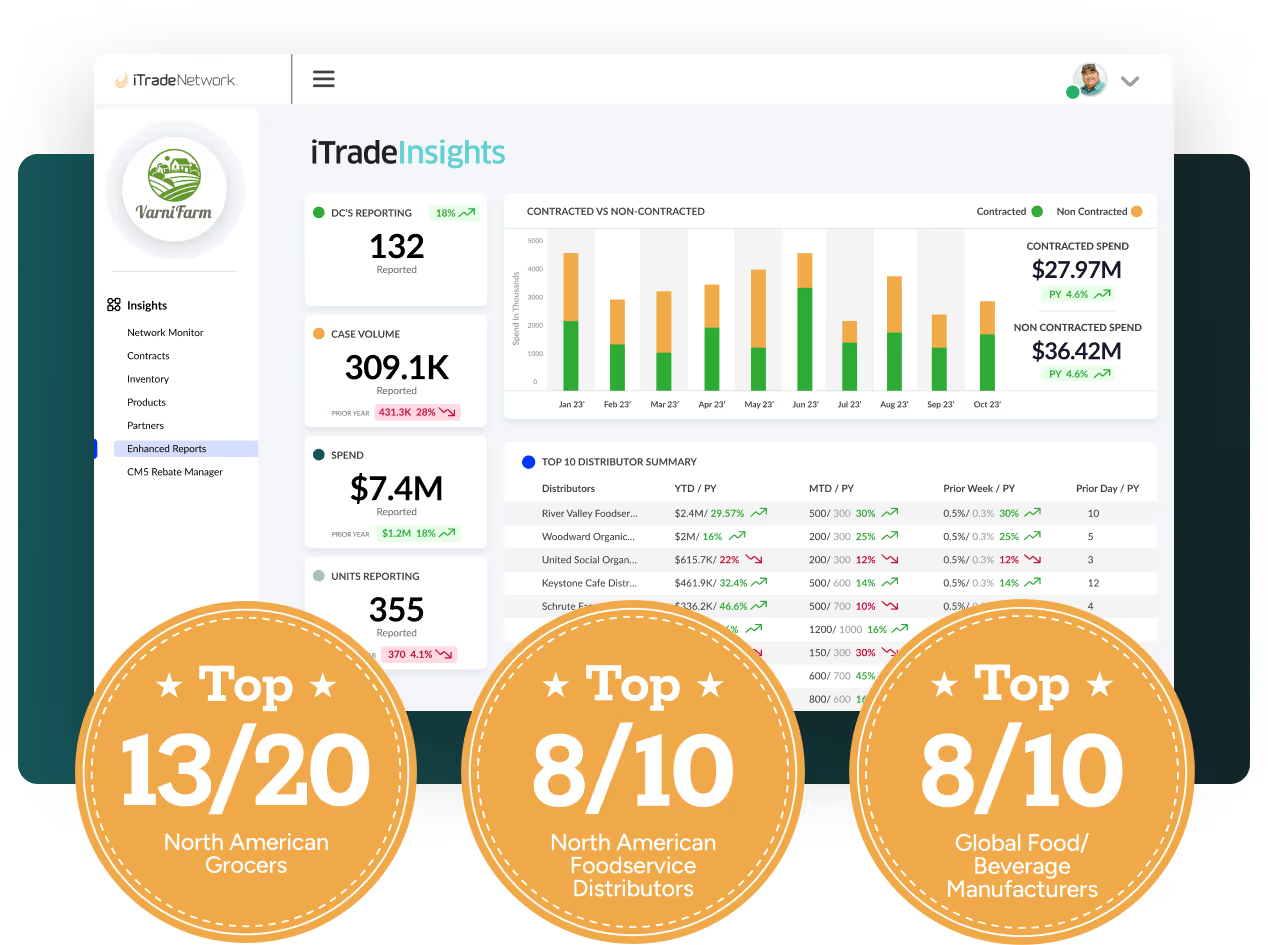
iTradeNetwork provides this foundation by acting as a single source of truth for item data, pricing, contracts, and trading partner activity. Through the Cerena experience, these capabilities are delivered in a connected way that aligns workflows across trade spend and revenue management. Cerena isn’t a tool teams log into; it’s how iTradeNetwork ensures its solutions work together so issues are surfaced sooner and resolved faster.
In a cost-sensitive environment, protecting margin isn’t about reacting after revenue is lost. It’s about removing the blind spots that allow leakage to happen in the first place.
Redefine the revenue impact of freight data & analytics
Uncover what clients and clientele are prioritizing in today’s shifting freight and logistics landscape.
Redefine the revenue impact of freight data & analytics
Uncover what clients and clientele are prioritizing in today’s shifting freight and logistics landscape.
Speak to an Expert
Take a closer look at the platform built for buyers and their trading partners
The Hidden Margin Crisis: How Revenue Leakage Shows Up in Everyday Workflows
Margin pressure has always been part of food manufacturing. What’s changed is how easily it can slip through the cracks.
With costs moving unpredictably and service expectations staying high, accuracy across pricing, rebates, and deductions is no longer optional. Yet many manufacturers still rely on manual, disconnected processes to manage trade programs. The result isn’t always obvious at first, but over time it shows up as revenue leakage that’s difficult to trace and even harder to recover.
Most margin erosion doesn’t come from one major failure. It comes from small mismatches that surface during everyday work.
When contract terms, pricing updates, and item data live in different systems, teams are left to reconcile the differences by hand. That’s where problems start to appear:
- A rebate rate applied incorrectly because a contract update wasn’t reflected everywhere
- A bill-back rejected due to inconsistent item identifiers
- A deduction delayed while teams sort through conflicting data
- Individually, these issues may seem manageable. Over time, they add up to avoidable write-offs, disputes, and rework that slowly eat away at margin.
Cost volatility makes these gaps even more expensive. As input prices, freight costs, and labor expenses shift, there’s less room for error. Every delayed claim, inaccurate payout, or unresolved deduction has a direct impact on profitability. In an industry that still operates on thin margins, small inefficiencies can quickly become material losses
Fragmentation Is Where Leakage Begins
What makes this challenging is that the issue isn’t effort or attention. Finance, trade, and operations teams are working hard. The real problem is fragmentation.
In many organizations, trade programs, claims, audits, and pricing are managed in isolation, making it difficult to see where data disagrees or where risk is forming. Centralizing these processes changes that dynamic. With shared visibility and consistent data, teams can:
- Identify discrepancies earlier in the claim and rebate lifecycle
- Reduce manual reconciliation and back-and-forth with partners
- Audit programs with confidence using aligned contract and pricing data
iTradeNetwork provides this foundation by acting as a single source of truth for item data, pricing, contracts, and trading partner activity. Through the Cerena experience, these capabilities are delivered in a connected way that aligns workflows across trade spend and revenue management. Cerena isn’t a tool teams log into; it’s how iTradeNetwork ensures its solutions work together so issues are surfaced sooner and resolved faster.
In a cost-sensitive environment, protecting margin isn’t about reacting after revenue is lost. It’s about removing the blind spots that allow leakage to happen in the first place.
Unlock It Now!